Posts Tagged ‘keywords’

Why Keyword Research is The First Thing You Should Do


What should come first? Your website or your keyword research.

Unlike the chicken and the egg conundrum, this one is easy to answer – your keyword research should always come first.

Researching your keywords (not guessing) is vital if you are going to get the most out of your web presence. The words you target will have a big effect on your website’s structure, which is why it’s vital you do it before thinking about your design.

It’s not until you have your keywords that you can:

  • Create your SEO Copywriting
  • Plan your anchor text link building strategy
  • Decide on your site’s navigation
  • Create your title tags
  • Decide on your URLs
  • Write your META Descriptions

What keywords do you choose?

Choosing the right keywords/phrases is paramount, so here are a few tips on making sure you find the right ones.

1. Open your mind

First up, you’re looking for the words other people will use to find your products/services. They are not necessarily going to be the same ones you’d choose.

They must be relevant to what you do, after all, loads of traffic is useless unless is converts into buying customers.

Also think about using ‘long tail keywords’. For example, if you sold laptops, targeting ‘laptops’ would be very competitive, but it would also bring ‘browsing’ traffic. When people are ready to buy, they are more likely to use a term that includes the make and model of the specific laptop they want. Therefore it is important you also aim for these longer keywords too.

2. Word groups

Start off with words and phrases that relate to what you do. Then, add to that list words used within your industry. Expand it again to include words used in the media for your products and services. Then, for good measure, throw in some geographically specific phrases too.

Once you have your (long) list, use Google’s keyword research tool to refine your list.

3. Competition

Once you have your list, you then have to decide which are the best ones to target. That means looking at their relevancy and competition.

Basically you want a term  that brings lots of traffic, but not one that is highly competitive, because trying to rank for it will be a long hard slog.

You can use this table to help you identify which words are the best ones to go for:

As you can see, your whole website’s design and marketing campaigns are going to be focused around your keywords.

That’s why it is essential that, before you start any design or marketing, you research and find the keywords you want to target.

Using YouTube for Keyword Research


Sally Ormond, freelance copywriter, comments on Kieron Hughes’ post “Using YouTube as a keyword research tool for SEO” that appeared on SEOMOZ.org

videoWhen talking keyword research, most people think about what they’re selling (products and services) and probably their geographical location.

For many people, the primary tool used is the Google Adwords Keyword Tool. But there is another, frequently overlooked possibility.

YouTube.

Yes, you would normally associate YouTube with hours of entertaining videos (and some not so entertaining) but it can also be used as an effective keyword research tool. I first came across this idea when I discovered a post on SEOMOZ.org by Kieron Hughes – in his post he discusses the merits of using YouTube as a keyword research tool for SEO.

Uploading videos to YouTube couldn’t be easier. If you have a computer and internet connection, you’re in business. So how can it help with your research? Well it’s not actually the videos that help, it’s the descriptive content that accompanies them that is a gold mine of information.

In his blog post, Kieron uses the example of speech therapy to illustrate his point. By searching on YouTube he generated associated words such as:

•    Autism
•    Oral motor exercise
•    Chewy tube
•    Down syndrome
•    Oral motor therapy
•    Apraxia

This kind of detail wouldn’t be picked up through Google’s tool. When you’re researching for a client or for yourself, YouTube is invaluable as a research tool to help you uncover potentially lucrative keywords.

Because people from all walks of life use YouTube as a platform to share their knowledge and experiences it is a rich resource just waiting to be tapped into. These users are also the ones who use the search engines daily and so are invaluable sources of information.

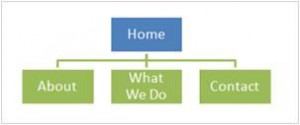
By using YouTube you could change your initial site navigation from:

YouTube as keyword tool

To something that reflects your industry with greater SEO potential:

enhanced navigation

Next time you need to do some keyword research remember to take a look at YouTube as well. Added to your other research material, it will help you develop an intricate SEO strategy that will get your business noticed.

Keywords and Press Releases


Most people see press releases as off line marketing tools. But that doesn’t mean you should lose sight of the fact that they can also be published on online press release websites.

The main advantage of that is that where printed press releases appear for just one day and then become someone’s chip wrappings the next, online press releases will be attracting a new audience for months or even years after its original release date.

That’s why you should always write your press release to include your main keywords so it will continue to attract the audience you want. Although it is important you still follow the usual rules of press release writing.

The usual rules apply

Your press release should still:

  • Be regarded as newsworthy rather than a thinly veiled advert
  • Be brief and too the point. Any waffle will get it rejected immediately
  • Contain quotes from real people and referenced back to them
  • Ensure the first paragraph  summaries your story
  • Make sure you send it to a targeted group of editors rather than going for blanket coverage

The on line press release

Keywords for press releases are just as  important as for your website copy. If you are unsure about how to go about it hire a freelance copywriter to help you.

Using keywords within the copy will make sure your press release is constantly picked up by your target audience for as long as it remains on the internet. The key things to remember are:

  • Focus on your primary keyword for the headline, quotes and opening paragraph but taking care not to over stuff your content
  • Make sure your summary also contains your keyword
  • Still keep your press release brief and to the point
  • Do your research and make sure you send it to journalists and bloggers who will be interested in your  subject

Following these simple tips will help your press release generate new readers and traffic for you for a long time to come. So, if you don’t already do it, start getting your press releases online and enjoy the benefits of longevity and constant traffic.

Using Local SEO Copy on Your Website


If you are a business owner looking to get into online marketing and, in particular, search engine optimisation, don’t forget to think local.

More and more people are searching for local companies through the search engines so it’s never been more important to ensure you have a strong local SEO presence on the web.

Many companies concentrate their SEO efforts on fairly generic terms that relate to their products and services but forget about their geographical details.

With the advent of increased and improved mobile search, it is vital you stand out in your local area. And the best way to do that is by utilising the power of local search.

Location, location, location

If your company covers a specific geographical location, make sure those details are added to your HTML through page titles. You should also try and use these details within your copy and headings but be sensible.

Remember you are first and foremost writing for your reader – if you over do it, the page will look clumsy. Other areas for location information are within the footer along with your address and also within your internal hypertext linking structure. Instead of linking freelance copywriter, use a geographical reference such as Suffolk freelance copywriter.

YouTube

You can also boost your online presence through marketing. Upload your video to YouTube and then use very localised tags – without being spammy. The chances are (depending on the competitiveness of your keywords) you’ll be able to get these ranked and the more entries you can get on a front page local search results, the fewer your competitors can have.

Wider areas

If your business covers several geographical areas you could consider creating specific landing pages for each area. They should have unique content (you don’t want to fall foul of the duplicate content trap) and optimised for each specific area. Hypertext links within these pages can then drive your visitors to your main website.

Boost your profile

Social networking sites make it easy to spread your business name to a wide audience. Set up social media profiles which relate to your geographical region. But, as with the landing page content, make sure each description is different. You should also utilise Google Places, Yahoo local, and Bing Local to boost your local profile.

Remember to always think local by adding location modifiers to your keywords.

What is Keyword Research?


As an online marketer, it is vital you get your head around the various concepts of search engine optimisation.

This is the most effective, long term solution to achieving great Google rankings. It’s also probably one of the most cost effective. But many companies are still opting for PPC campaigns instead. Although they can generate fast results, they are usually very expensive and not a great long term option.

If you rely totally on PPC, what happens when your budget runs dry? Your website will disappear from the search results and your traffic will dry up. And if there’s no traffic there won’t be any sales.

SEO is an investment. It may not give immediate results but, if you go about it the right way, it will over time produce great organic rankings with a constant stream of traffic.

The first step to achieving this is…

Keyword Research

This is vital – get this wrong and you won’t get the traffic you want. Keywords are the words and phrases people actually use when searching for your business.

Many companies get this wrong because they go for something too general. For example, copywriter in Google UK returns in the region of 7,500,000 results and is therefore a very competitive term. But, by going for a more regional term, such as Suffolk Copywriter (which returns 56,400 results) there is less competition and consequently more chance of you hitting the front page.

So it’s good to go local, especially to start with as this will be the quickest way to see results. Over time, with constant link building and content generation, you will begin to see rankings for other keywords, especially more general ones.

Just remember to be realistic about what you are aiming for.

Keyword Tools

There are many tools out there, but the most popular is Google’s Adwords tool. But, to get the most out of it, you have to learn how to use it effectively.

keyword tool

Recently I came across  this post on dailybloggr.com – “Tips to Use Google’s Keyword Research Tool Effectively”. It’s great for helping you to understand how to find the optimum keywords for your industry to make sure you attract the right traffic to your website. After all thousands of visitors are only any good if they are actually looking for you. If you target the wrong keyword the only thing you’ll achieve is a high bounce rate – and that’s not a good thing.

Why not pop over there now and take a look and take the first step on your SEO journey.

Related Posts with Thumbnails