Archive for the ‘Freelance copywriting’ Category

Can You Really Afford NOT to Use a Copywriter?


Yes I know, you’re a start-up business so money’s tight. But, you still need engaging marketing materials and an effective online presence to get things off the ground.

More often than not, copywriting is the one thing that gets crossed off your set-up shopping list.

Why?

Because you think you can do it yourself.

Granted, you can write pretty well. But can you write something that makes people think “Yes, that’s exactly what I need”?

Going it alone without a copywriter

This is a familiar scenario:

The task to write your sales copy is passed to someone in your office. They already have a full workload so it gets pushed to the bottom of the pile.

Eventually, the need for the copy becomes urgent so they spend their lunch hour quickly writing something that ‘will do’.

The problem with this is, writing about your company is difficult because you’re too close to it. It is incredibly difficult to stand back and look at what you offer through the eyes of your customers.

The result is you end up with copy that tells your reader all about your company and absolutely nothing about what your company can do for them.

What a copywriter will do for you

When you bring in a professional copywriter they will ask lots of questions to learn about:

  • Your company
  • Your product or service
  • Your audience (i.e. your ideal customer)

This helps them understand you, your product/service and, more importantly, the person you are trying to sell them to.  Through this process, they can place themselves in your customers’ shoes and discover what it is that your readers really want to know.

The copy will talk directly to the reader, address their problems and sell them the benefits of your product/service.

The result?

  • Your website copy will be optimised and will convert visitors into paying customers
  • Your brochures will sell, not just inform
  • Your case studies will entertain, inform and sell
  • Your press releases will engage and generate new enquiries
  • Your email marketing will be effective because they will be opened, read and acted on

Do you still think copywriting is a waste of money, or something you can do on your own?

Every piece of written marketing could be the first impression the reader has of your company. Make sure it gives the right impression – that you are a company that is professional and understands what its customers want.

How Old is Your Email Marketing List?


manRegular communication with  your customers is a great way to keep them informed and to keep your name firmly etched in their minds.

One of the most effective ways of doing this is through email marketing

New subscribers will eagerly await your first email to land in their inbox. They will probably continue to welcome them until, one day, the honeymoon period is over.

You will begin to realise your emails aren’t being opened as often (or at all); your messages are now unloved, unopened and unwanted.

What do you do?

Panic?

Send flowers?

It’s time to take action.

Fighting email marketing list fatigue

1. Frequency

Are you still sending the same number of emails? When your subscribers opted-in, you would have made it clear how often they would hear from you. If you’re sending more it could be time to scale back a bit.

2. Stale content

Are you starting to cover the same old stuff?

Perhaps the layout and content is becoming too predictable? If so it’s time to inject some life into them.

3. Incoming!

Bombarding your customers with news and new offers will get wearing. If you have new products to announce stagger your emails so they don’t receive 4 or 5 from you within one month.

4. Subject line

These are never easy to write and although you may have been buzzing with great ideas initially there’s a chance they’re becoming mundane and ineffective. 

People will only open an email if the subject line catches their attention so perhaps it’s time to have a rethink about your subject line approach (or call in a copywriter to help you generate fresh and appealing content).

5. No one’s home

Email addresses change so if one of your recipients hasn’t engaged with your mailings (i.e. they haven’t opened it) for 6 months or more, send out a ‘reengagement’ email. This would be an email that asks them to take an action if they want to remain on your list.

If you don’t hear anything it’s safe to say that either:

  • The email address is no longer active, or
  • They no longer want to receive your emails

So it may be time to remove them from your list.

6. Spam

Spam filters may be stopping your emails getting through so make sure you test them.

To make sure your email marketing continues to be successful, regular list maintenance is essential to ensure that:

  • Your readers are happy with their content
  • All email addresses are active
  • You are avoiding spam triggers
  • Your subject lines are being effective

Copywriting–Conveying Trust


cashIn any business relationship, trust is probably the most important factor. After all, if someone doesn’t trust you they’re not going to buy from you.

So, when you’re creating your marketing materials, your copy has to convince your readers that you are trustworthy.

Before I go on to explain how this can be achieved, I want to look at how you can build trust through blogging. The posts on your blog are very personal to you so your reader instantly connects with you because they feel they know you through your words. This is the exact type of connection your sales writing has to replicate. 

The problem is many people believe that if you fill your copy with hype and shout BUY MY PRODUCT NOW people will do as you ask.

Wrong.

We all have a natural resistance to buying. When asked to part with your money it’s only natural you become cautious.

To get your customers to buy you must prove you’re not a charlatan and you’re not going to rip them off. You have to convince them to trust you – not something that’s easy to do through text.

Here are a few techniques you can use to create copywriting that sells.

Tell them a story

Don’t rely on bold or colourful lettering when telling someone about your product – that won’t make them buy.

Everyone loves a story so use that in your copy to help build credibility. Tell them why you created the product weaving in your credentials (number of years experience, clients you’ve helped etc.) to your benefits driven copy.

By incorporating the benefits in this way you’ll instantly begin to break down their buying resistance.

Just by chance

Many people fall into business or stumble across a great idea for a product. If this is how you started tell your story. Show them the process you went through to bring your product to market and how it has helped others.

There’s no room for fairy stories in business so your story has to be true and credible if it’s going to work. This approach is an excellent way to make a human connection with your reader.

Case study

The case study is one of the most powerful sales tools there is. Writing about a client’s experience of your product/service will show the reader exactly what can be achieved. 

Boost your credibility by naming names, showing quantifiable results and using direct quotes from your customer.

As you can see, selling is about showing the benefits, breaking down resistance and convincing them to buy.

Once you’ve put your ‘sales pitch’ across don’t forget to add in your call to action to make sure they buy.

The Copywriter’s Green Cross Code


orange traffic lightSTOP – LOOK – LISTEN

Those three words were probably drilled into you when you were a child.

You would also do well to remember them when copywriting.

That might seem a strange thing to say but when creating sales and marketing content, many people just dive straight in. That’s because it’s usually one of those jobs that is squeezed in between other projects.

And there’s the problem – content creation shouldn’t be seen as one of those jobs you have to fit in now and then. It’s vital for your business from an SEO perspective and for getting your message out to your audience effectively.

Stop

Before you start to put pen to paper or finger to keyboard, stop and think about what you are doing and why. Every piece of copy must have a purpose so ask yourself:

  • What is going to be the best platform for your message?
  • What do you want to achieve from your copy?
  • How do you want your audience to react?
  • What do you want to tell your audience?
  • What end result do you want to achieve?

Creating content is like creating a new product. You wouldn’t dream of making a new product without carrying out R&D first, so why just sit down and cobble together some half hearted sales copy?

Look

Although your content is important, so too is how it looks.

If it doesn’t have instant readability appeal, no one will read it. In which case there wasn’t a lot of point in writing it in the first place.

Using headings, subheadings, bullet points and images will make your content more attractive and accessible. A solid wall of text is a real turn off but a page with plenty of white space, bullet points and small chunks of text, is a far more interesting prospect.

Listen

You not only have to listen to the needs of your business and customers, you also need to listen to yourself.

Your content has to tell your reader what’s in it for them and represent the voice of your business.

Once you’ve written your content, read it out loud. This will help you make sure it flows, makes sense and will provoke an emotional response in your reader.

As you can see, content creation is much more than just stringing a few sentences together. A lot of thought, planning and shaping has to go into every piece of content you produce.

So remember - stop, look and listen before you publish.

Using YouTube for Keyword Research


Sally Ormond, freelance copywriter, comments on Kieron Hughes’ post “Using YouTube as a keyword research tool for SEO” that appeared on SEOMOZ.org

videoWhen talking keyword research, most people think about what they’re selling (products and services) and probably their geographical location.

For many people, the primary tool used is the Google Adwords Keyword Tool. But there is another, frequently overlooked possibility.

YouTube.

Yes, you would normally associate YouTube with hours of entertaining videos (and some not so entertaining) but it can also be used as an effective keyword research tool. I first came across this idea when I discovered a post on SEOMOZ.org by Kieron Hughes – in his post he discusses the merits of using YouTube as a keyword research tool for SEO.

Uploading videos to YouTube couldn’t be easier. If you have a computer and internet connection, you’re in business. So how can it help with your research? Well it’s not actually the videos that help, it’s the descriptive content that accompanies them that is a gold mine of information.

In his blog post, Kieron uses the example of speech therapy to illustrate his point. By searching on YouTube he generated associated words such as:

•    Autism
•    Oral motor exercise
•    Chewy tube
•    Down syndrome
•    Oral motor therapy
•    Apraxia

This kind of detail wouldn’t be picked up through Google’s tool. When you’re researching for a client or for yourself, YouTube is invaluable as a research tool to help you uncover potentially lucrative keywords.

Because people from all walks of life use YouTube as a platform to share their knowledge and experiences it is a rich resource just waiting to be tapped into. These users are also the ones who use the search engines daily and so are invaluable sources of information.

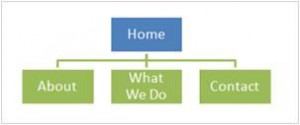
By using YouTube you could change your initial site navigation from:

YouTube as keyword tool

To something that reflects your industry with greater SEO potential:

enhanced navigation

Next time you need to do some keyword research remember to take a look at YouTube as well. Added to your other research material, it will help you develop an intricate SEO strategy that will get your business noticed.

Content Marketing–How to Make a Splash


question_mark1What is content marketing?

It’s all about building your reputation as an expert online. That doesn’t mean posting loads of mediocre articles and blogs in the vain hope that someone will read them. Content marketing is about providing quality, informative and interesting information that will add value to your readers.

The 3 elements of content marketing

If you want to excel at content marketing there are 3 things you have to do:

  • Create content that sells you
  • Write content that’s optimised for the search engines to increase its longevity
  • Repurpose your content and spread the word

Are you sitting there thinking – “What’s the point? It’s not as is anyone reads stuff like that anyway.”

If you think like that you’ll never get anywhere. Instead you have to think of your content as a huge loud speaker that will tell  the world how great you are, what an expert you are and that what you have to say is worth reading.

Once people start to see your content plastered all over the web they’ll think of you as a market leader, a giver of great information and will be more inclined to give you a call or drop you an email when they need your services.

In a nutshell - Content generation means you’ll get found

So what is content?

It can be anything: white papers, reports, articles, blogs, videos, FAQs, audio etc.

Creating content in a variety of forms will make sure you appeal to a lot of different audiences. Not everyone likes to get their information through reading, some prefer to listen or to watch – offering a range of formats will provide something for everyone.

Making your content great

1. Should it be promotional?

Nope – be subtle. If you are obviously selling something it’s going to come across as an advert rather than advice. Offering information positions you as an expert who is open and approachable. 

2. Be relevant

Make sure you know what your reader wants and give it to them.

3. Well-written

Engaging, well-written, interesting – get those 3 things right and you’re practically there. 

4. Relevant to your company

For arguments sake, let’s say you’re a copywriter. If you suddenly start writing about the latest engineering practices your audience is going to be left wandering what on earth’s going on. Make sure you write on topic within the realms of your expertise.

5. Shout about it

If you’re going to spend time creating content you have to promote it. Use everything you can — social media, PR, search engine optimisation. That way you’ll make it stand out so your audience can find it.

At the end of the day, if you want your content marketing to work make sure you:

  • Write regularly
  • Write well
  • Write relevant material
  • Promote it.

Making Yourself Heard by Blogging


megaphoneThe power of a blog is a wonderful thing.

It gives you the opportunity to get your personal view of things out there in the open where others can read them.

You can share tips and advice. Engage your worldwide audience and share your knowledge to position yourself as an expert in your field.

You can create a buzz and a following that gets your name and your business noticed by potentially thousands of people.

Of course there is one downside that puts many people off:

A blog is for life, not just for Christmas

If you want to make an impact with your blog you have to be dedicated, blog regularly and come up with an endless stream of content.

Dedication

A good blogger is a dedicated blogger.

They live to engage with their readers and provide them with an endless stream of quality content.

Their posts generate debate and a following. Sounds impossible but you too can achieve this through regular blogging. Posts that are relevant and interesting to your audience will get you noticed. People will come back to your blog time and time again and share it with others through social media.

Adding value

Regular blogging is all well and good but only if it adds value which means you must generate great ideas.

Inspiration for topics can strike anytime so make sure you always have pen and paper close by so you can write down your ideas when they strike.

Be useful

Long posts, short posts. Each topic and your own preference/writing style will dictate here. But if you keep your posts relatively brief, the information is more likely to be easily absorbed and will get them to come back for more.

Mix it up

People absorb information in different ways.

Some like to read, others prefer to listen and some like to watch videos. Offering a range of posts that use all these methods will widen the appeal of your blog.

What it comes down to is this – if you want to build a blog that draws in readers you have to write regularly, well, with variety but always it has to have interesting content.

Blogging really can help your business – it doesn’t matter if you’re a copywriter, a plumber, a solicitor or an accountant – a well written blog can help you by positioning yourself as an expert in your field.

Getting The Most From Your Copywriter


How to brief effectively

The beginning of your relationship with your chosen copywriter is vital.

You’ve done your research; you’ve asked the right questions and you’ve found the perfect writer to help you with your project.

So what’s next?

Your copywriting need could be anything from website copy or brochure content to newsletter content or case studies. Whatever it is one thing remains the same – you must give your writer all the information they need to create your content.

I use a detailed pro-forma to extract the information I need. Sometimes my clients are so great they email me immediately with everything I could possible want to know about their company and product or service.

Other times I’m only given the barest of instructions. But that’s not enough.

What your copywriter needs to know

First up let’s take a look at what copywriting is.

My job is not to know your business better than you do. My job is to present your company, it’s products or services in the most eye-catching and compelling way possible.

Home grown copy (that which businesses write themselves) has a tendency to be all about the business and its achievements. The problem is, that’s not what your readers want. They want to know what you’re going to do for them.

Basically your copy has to be written from your customers’ point of view which is why investing in a professional copywriter is a must. Not only do they understand how to write powerful marketing copy, they can also view the company and its products/services from the customers’ perspective.

Just write it

The problem is, to be able to create the copy  your writer will need as much information as possible about your company, its services and products, its ethos as well as the tone you want to convey.

I have, on occasion, had clients that were aghast when I asked them for that type of information. They seem to think that providing me with it would equate to them doing my job for me.

Not true.

So I have explain that I’m good but I don’t have a crystal ball, I don’t know their company intimately so I can’t write fabulous copy just from their company name.

To illustrate my point consider this. You’re planning on getting married. You’re going to have your dress made for you, found the perfect designer and go and see them to get it started.

When you sit down with them you just say “Make me a wedding dress.”

They are unlikely to “OK”.

They’ll want to know:

  • What your measurements are?
  • Whether you want short or long
  • Do you want a straight dress or one with a full skirt?
  • What colour do you want?
  • Do you want a train?

And that’s just for starters.

You wouldn’t dream of doing this so why expect your copywriter to write amazing SEO website copy from your instruction “I want you to write my website – get on with it”.

A close relationship

The relationship between a copywriter and client should be a close one which is collaborative. You can bounce ideas from each other to develop the perfect copy.

The more work your copywriter does for you, the better they get to know your company. They’ll be able to offer suggestions and help you strengthen all aspects of your marketing.

A great copywriter should be seen as an asset and one that’s worth holding on to.  

Effective Press Releases


newsWhat’s the golden rule when it comes to writing press releases?

DO NOT USE THEM TO SELL.

A press release is all about providing the reader with news. If you want to place an advert pay for it like everyone else.

But because it’s not paid for, your press release has to be top notch if you want to get it published.

Every newspaper and magazine editor is looking for genuine news that their readers are going to want to hear about. But it also has to fit the style and tone of their publication.

That all sounds like a lot of hard work and rather a hit and miss affair which is why many businesses shy away from issuing releases. But there are a number of benefits to be had so it’s well worth giving it a go.

Benefits of press releases

First off, they are relatively cheap to produce. Regardless of whether you write them in-house of hire a professional copywriter, they are a cost effective way of promoting your company.

Plus, because they appear as an editorial piece rather than an in your face advert, they’re more likely to read and viewed as being independent from your company and therefore will carry more weight.

Of course, there always has to be a downside to balance the positives:

The downside of a press release

When you write articles for the web, your own web copy, blogs and brochures, you have ultimate control over the content.

But when writing press releases you relinquish that control once it’s been sent to the editor. Just because you’ve written a 2 page release doesn’t mean there’ll be room for it in its entirety within the publication. The editor may have to truncate it and may not carry as prominent a position as you’d like.

The best way to use a press release

Your press release can be used for many purposes, such as announcing:

  • A new website
  • A new product or service
  • A forthcoming event
  • Charity work
  • Advice
  • Community involvement

But whatever the reason for your release, the subject has to be relevant to your audience if you want it to be accepted and published. That means doing research into the publications you are targeting.

The easy way to get your press release ignored

This may seem an odd thing to be including in this post, but if you do any of the following your press release will be ignored and consigned to the rubbish bin:

  • Use a bad subject line in your email such as Press release.
  • Using a bad headline.
  • Filling it with waffle so it takes an age to get to the real news.
  • Writing a disguised advert. Editors aren’t stupid, they will spot it. 
  • Using sloppy English, dodgy spelling and atrocious grammar.
  • Fill it with flowery language, repetitions, waffle and adjectives galore.

Now find out how to get your press release published

OK, we’ve seen what not to do, so now on to what you should do.

Take a look at your story, what makes it interesting? Can you use a local angle to create a hook to grab your readers’ attention thereby making it more relevant to them.

Basically, what that boils down to is using the good old fashioned Who? What? Where? When? Why? and How? in your opening paragraph.

Finally, it’s always a good idea to include the word count, release date, contact details, brief company profile (in the notes at the end), notes for the editor and any photo opportunities.

Also make sure you write in the third person and be concise without using jargon. 

Structuring your press release

Here’s a quick run down on how you should structure your release:

1. Write Press release at the top of your page.

2. Write the date either as 7th November 2010 – For immediate release, or 7th November 2010 – 12.00 15th November 2010.

The first shows it can be used immediately, the second shows it must not be used until the specified time and date.

3. Next, your headline should be eye-catching and should grab the editor’s attention straight away.

You can also use a sub heading to flesh out more of the story.

4. The first paragraph is critical and must dive straight into your story. Forget hype and adopt a journalistic tone which sticks to the facts.

5. The second paragraph gives supporting evidence but must still remain focused.

6. The third paragraph is the place for quotes that are relevant to the story. But make sure you have permission to use them.

7. Your final paragraph is your conclusion, briefly explaining the link between the story and your company.

8. Finish with ‘Ends’ or ###

9. Finally add notes for editors and contact details.

That simple 9 point list gives you the general outline for your press release.

Just remember, if you want to be successful it must be about genuine news and not a disguised advert and shouldn’t overly promote your company.

Done correctly, press releases can generate a lot of interest in your company; done badly and they’ll only ever see the recycling bin in the editors office.

Google Instant Preview

The SEO Low Down

Google is constantly changing. It loves to keep internet marketers on their toes by changing the goal posts every so often.

One of the most recent changes that you’re bound to have noticed is the introduction of Google Instant Preview.

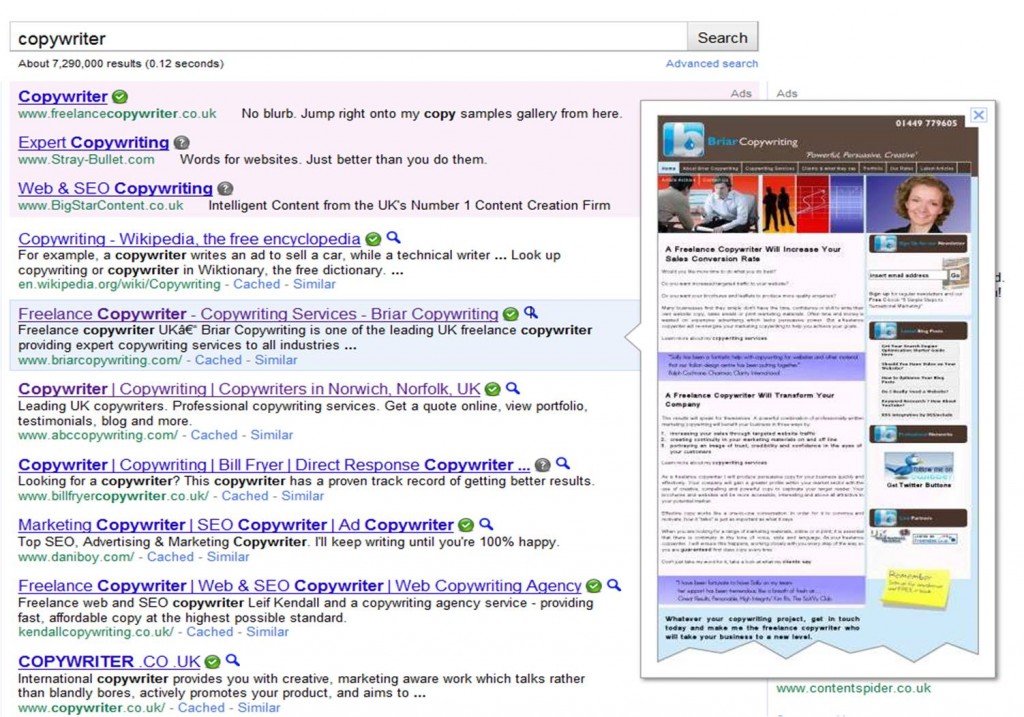
Now, when you enter a search term in the Google search box, each of your results will have a little magnifying glass next to it. Designed to help you search smarter, by clicking on the magnifying glass you bring up a preview of the web site so you can see in an instant whether it’s going to be of interest to you. Google instant preview

So now, rather than having to open a site, scan it, realise it’s not for you, hit the back browser and start all over again – you can scan the results without leaving the page to find the website that’s going to offer you what you’re looking for.

How does that effect SEO?

Well, to be honest, no one is really sure at the moment. But what it does mean is that you have to be sure your website is maximised to attract the click-through. Basically you have to make sure that the preview gives them the information they need to choose you.

Here are a few things you can do to tip the balance in your favour:

Say farewell to flash

As you know, flash is not good for SEO because the search engine spiders have a tough time crawling it and are unable to distinguish between normal text and the more prominent heading text (i.e. H1, H2 tags etc.)

An added complication now arises with the arrival of Google Instant Preview because the Preview can’t render the flash element of your website leaving it looking rather distorted and unattractive.

Basically if you want your website to shine, ditch the flash.

META Descriptions

You already know that your META Description doesn’t have a direct effect on your SEO as far as ranking position goes. But it comes into its own when it comes to attracting click-throughs.

The 150-160 characters must convince the searcher that your website is worth checking out because it offers the information they need to know. If you want your magnifying glass to be clicked make sure your META Description tells them what they need to know by including your keywords.

Headings

The size of the preview means the reader isn’t going to be able to make out all the text on your website. That’s why it’s imperative that you use good, descriptive headings within your site that contain your keywords.

By acting as sign posts, they will show the reader what information is available on your web page so their decision to click will be based on what they can see – your headings, layout and images.

Images and Alt tags

Using the right images can make your website. They should be relevant and interesting enough to lure your reader in. Also, to give your SEO as much of a boost as possible, you must also ensure you utilise their Alt tags and filenames making them descriptive, relevant and contain your keywords.

It doesn’t matter what line of business you’re in - a copywriter, electrician, solicitor or builder – these 4 techniques will help boost the attractiveness of your website.

In the ways of the web, looks and substance are both needed if you want to attract traffic. Remember the preview shows only a reduced scale version of your website so you’ll needs as many visual cues as possible to get the click.

Related Posts with Thumbnails